
SPC, WPC, and LVP flooring: these three terms describe vinyl flooring options that appear identical on the surface but perform very differently in Florida’s constant humidity. LVP (Luxury Vinyl Plank) is the broadest category. SPC (Stone Plastic Composite) and WPC (Wood Plastic Composite) are two distinct types of LVP, defined by the core material. This guide explains what differentiates each category and which is best suited for your project.
Quick Answer
SPC
Limestone + PVC core. Density 1.95+ g/cm³ (ASTM F3261). 100% waterproof. Best for Florida kitchens, bathrooms, pets, and rentals.
WPC
Wood polymer + foam core. Density 1.2 to 1.4 g/cm³. Softer underfoot than SPC. Also 100% waterproof. Best for bedrooms and family rooms.
LVP (Flexible)
Flexible PVC core. Water-resistant surface only. Not 100% waterproof through full thickness. Not recommended for Florida’s humidity.
In This Article
- The Terminology Problem: Why LVP, SPC, and WPC Get Confused
- SPC Flooring Explained
- WPC Flooring Explained
- Flexible LVP: What It Is and Why It Underperforms in Florida
- SPC vs WPC vs LVP: Full Comparison for Florida Conditions
- Which One Is Right for Your Florida Project?
- SPC Vinyl Available in Orlando: In Stock, No Minimum Order
- Frequently Asked Questions
The Terminology Problem: Why LVP, SPC, and WPC Get Confused
Walk into any flooring store in Orlando and ask for “LVP flooring.” The salesperson will show you SPC planks, WPC planks, and possibly flexible vinyl planks, all labeled as LVP. All three look similar on the surface. All three come in wood-look finishes. All three click together with the same installation system. The difference is inside the core, and it matters significantly for performance in Florida’s climate.
LVP is the umbrella term for any vinyl flooring produced in a plank format that mimics the look of hardwood. SPC and WPC are two distinct subcategories defined by their core construction. Flexible LVP is a third subcategory with an older, non-rigid core. Understanding which category you are actually buying, before you purchase, is the starting point for any informed flooring decision in Florida.
How the Categories Relate
LVP — Luxury Vinyl Plank (umbrella category)
SPC
Stone Plastic Composite. Rigid limestone core. Density 1.95+ g/cm³ (ASTM F3261). Best humidity performance.
Indentation: max 0.08mm (ASTM F1914)
WPC
Wood Plastic Composite. Foamed wood-polymer core. Density 1.2 to 1.4 g/cm³. Softer underfoot, also waterproof.
Indentation: max 0.10mm (ASTM F1914)
Flexible LVP
Older flexible PVC core. Water-resistant surface only. Not 100% waterproof.
Not recommended for Florida floors
Sources: ASTM F3261 | ASTM F1914 | EN 16511
Section Summary
All SPC is LVP, but not all LVP is SPC. The label “LVP” on a product tells you the format (plank, wood-look), not the core material. The core material is what determines performance in Florida’s humidity. Always ask for the core type and density before purchasing.
SPC Flooring Explained
SPC (Stone Plastic Composite) flooring is built around a rigid core made from a dense blend of natural limestone powder, polyvinyl chloride, and stabilizers. Per ASTM F3261, the standard specification for rigid core luxury vinyl flooring, SPC cores achieve a minimum density of 1.95 g/cm³, with limestone content between 65% and 75% by weight. That combination produces a core that is inorganic, physically incapable of absorbing moisture, and dimensionally stable under temperature and humidity variation. The limestone content is what defines SPC and separates it from every other flooring category.
The SPC vs LVP flooring distinction is the most important comparison a Florida homeowner can make before purchasing vinyl plank. SPC’s limestone core delivers performance specifications that flexible LVP’s PVC core cannot match under Central Florida’s operating humidity conditions.
What makes SPC the right choice for Florida
Central Florida’s indoor humidity stays between 50% and 60% even with air conditioning running. Under those conditions, SPC vinyl shows less than 0.2% linear dimensional change, meaning the floor stays flat, the joints stay tight, and the surface performs identically in August’s peak humidity and in January’s drier air. Per ASTM F1914, qualified SPC flooring achieves a maximum indentation depth of 0.08mm, significantly less than WPC’s 0.10mm threshold. That structural density is what makes SPC the correct specification for kitchens, bathrooms, rental properties, and pet households in Florida.
The SPC vinyl collections at Rios Floor are available in 5mm total thickness with 12 mil and 20 mil wear layers, pre-attached IXPE acoustic pad, and click-lock floating installation. Starting at $1.29/sqft at wholesale pricing with no minimum order.
SPC — Key Technical Specs
100%
Waterproof
1.95+
g/cm³ core density (ASTM F3261)
0.08mm
Max indentation (ASTM F1914)
High
Dent resistance
WPC Flooring Explained
WPC (Wood Plastic Composite) flooring uses a foamed wood-polymer core instead of a dense limestone core. Per ASTM F3261 and EN 16511, WPC cores achieve a density of 1.2 to 1.4 g/cm³, significantly lower than SPC’s minimum of 1.95 g/cm³. The foaming agent in the WPC core creates air pockets throughout the plank structure, which is what makes WPC softer and warmer underfoot than SPC. Both WPC and SPC are 100% waterproof. The practical performance difference between them is comfort versus density.
Where WPC performs well and where it does not
In bedrooms, upstairs living areas, and spaces where underfoot comfort is the primary concern, WPC’s softer feel is a genuine advantage. The foamed core absorbs impact sound more effectively than SPC’s dense limestone core, with WPC delivering better acoustic performance in multi-story homes and condominiums where impact noise between floors is a concern.
In Florida kitchens, bathrooms, rental properties, and any space with heavy daily traffic, the density advantage shifts to SPC. Per ASTM F1914, WPC’s maximum indentation threshold is 0.10mm versus SPC’s 0.08mm. That difference matters in high-load environments: heavy furniture, appliances, and sustained traffic compress the foamed core over time in ways that SPC’s limestone core resists. For Florida’s most demanding residential conditions, SPC is the technically correct choice.
Section Summary
WPC is not an inferior product. It is a different product, optimized for comfort and acoustic performance over maximum density. For Florida whole-home installations, the most common approach is SPC in kitchens, bathrooms, and high-traffic areas, and WPC in bedrooms and lower-traffic living spaces where comfort underfoot is the priority.
Sources: ASTM F3261 | ASTM F1914 | EN 16511 | Jining Floormaker Engineering Specifications (floorcasa.com)
Flexible LVP: What It Is and Why It Underperforms in Florida
Flexible LVP is the original format of luxury vinyl plank flooring, a multi-layer product built around a flexible PVC core without the rigid stone or wood-polymer composite structure of SPC or WPC. It is the least expensive option in the vinyl category and the most limited in performance.
The surface of flexible LVP is water-resistant. The core is not waterproof. Under sustained humidity exposure, which is the permanent operating condition of any floor in Central Florida, flexible LVP cores can soften, expand at the seams, and allow moisture to migrate to the subfloor over time. The click-lock joints in flexible LVP are also less precise than those in rigid-core formats, creating wider potential pathways for moisture penetration at the seams.
Florida Recommendation
Flexible LVP is not recommended for any room in a Central Florida home. The humidity conditions that are normal for this climate, 50% to 90% depending on the season and the room, will expose the performance limitations of a non-rigid core within the first two to three years of use.
SPC vs WPC vs LVP Flooring: Full Comparison for Florida Conditions
| Category | SPC Vinyl | WPC Vinyl | Flexible LVP |
|---|---|---|---|
| Core material | Limestone + PVC | Wood polymer + foam | Flexible PVC |
| Core density | 1.95+ g/cm³ (ASTM F3261) | 1.2 to 1.4 g/cm³ (EN 16511) | Below 1.5 g/cm³ |
| 100% waterproof | Yes | Yes | Surface only |
| Max indentation depth | 0.08mm (ASTM F1914) | 0.10mm (ASTM F1914) | Not rated for rigid core |
| Dimensional stability | Less than 0.2% expansion | Less than 0.15% expansion | Moderate expansion |
| Florida humidity | Recommended | Acceptable | Not recommended |
| Dent resistance | High | Medium | Low |
| Comfort underfoot | Medium (IXPE pad improves) | High | Medium |
| Acoustic performance | Medium (pre-attached IXPE pad) | High (foamed core absorbs sound) | Low |
| Best rooms in Florida | All rooms, especially kitchens, bathrooms, rentals | Bedrooms, family rooms, low-traffic areas | Dry, low-traffic areas only |
| Price range (material) | $1.29 to $4.50/sqft | $2.00 to $5.00/sqft | $1.00 to $3.00/sqft |
| Lifespan in Florida | 20 to 30 years (20 mil) | 15 to 25 years | 5 to 10 years |
← Swipe to see full comparison →
Key Technical Distinction
The density gap between SPC (1.95+ g/cm³) and WPC (1.2 to 1.4 g/cm³) is the single most important structural difference between the two categories. That 30 to 40% density advantage is what produces SPC’s superior indentation resistance (0.08mm vs 0.10mm per ASTM F1914) and dimensional stability under Florida’s year-round humidity conditions.
Sources: ASTM F3261 | ASTM F1914 | EN 16511 | Jining Floormaker Engineering Specifications
Which One Is Right for Your Florida Project?
The decision between SPC and WPC comes down to two variables: the room’s moisture and traffic exposure, and how much underfoot comfort matters relative to maximum durability. Flexible LVP is not a recommended option for any Central Florida residential installation and is excluded from this decision guide.
For whole-home installations in Florida, SPC throughout is the most consistent recommendation. Modern IXPE acoustic pads have narrowed the comfort gap between SPC and WPC significantly.
SPC Vinyl Available in Orlando: In Stock, No Minimum Order
Rios Floor’s 2026 SPC vinyl catalog is physically in stock at our Orlando warehouse at 3320 Vineland Rd, STE A, Orlando, FL 32811. Available to homeowners and contractors at the same wholesale pricing, with no minimum order required. Same-day pickup Monday through Friday, 8am to 5pm. The full collection covers 13 wood-look collections in 12 mil and 20 mil wear layers, serving Orange, Osceola, Seminole, Lake, and Polk counties.
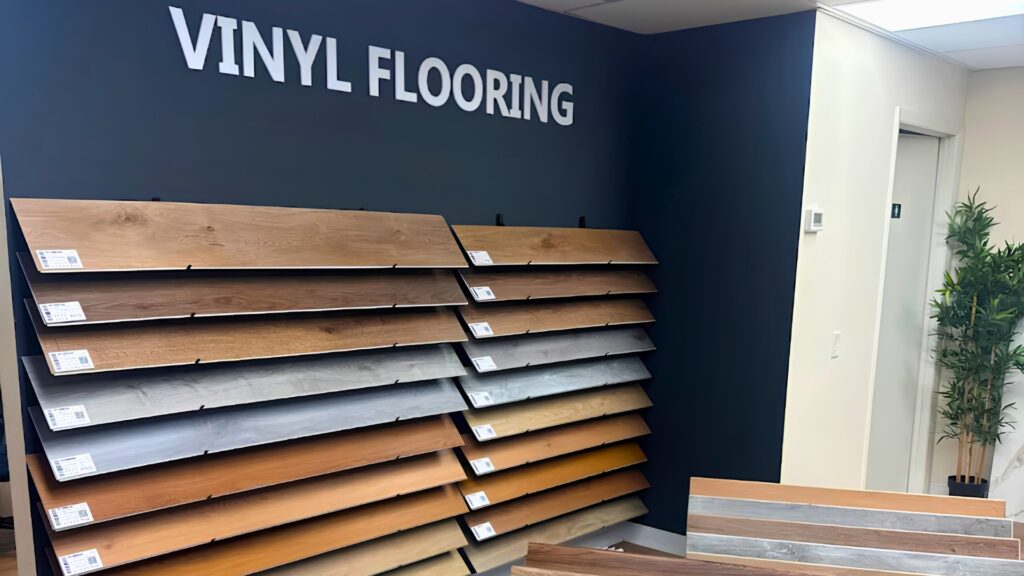
Visit our Orlando showroom to see both 12 mil and 20 mil options side by side before you decide. No appointment required. Walk-ins welcome.
Frequently Asked Questions
LVP (Luxury Vinyl Plank) is the broad category covering all vinyl plank flooring. SPC is a specific type of LVP defined by its rigid stone-plastic composite core, made from a dense blend of limestone powder and PVC with a minimum density of 1.95 g/cm³ per ASTM F3261. All SPC is LVP, but not all LVP is SPC. The older, flexible-core LVP format lacks the rigid limestone core that gives SPC its dimensional stability and superior moisture performance in humid climates like Florida.
SPC is the better choice for most Florida residential applications, particularly kitchens, bathrooms, rental properties, and high-traffic areas. Its dense limestone core (1.95+ g/cm³) is more dent-resistant than WPC’s foamed core (1.2 to 1.4 g/cm³), achieves a lower maximum indentation depth per ASTM F1914 (0.08mm vs 0.10mm), and performs more consistently under Florida’s sustained humidity. WPC is a valid choice for bedrooms and low-traffic living areas where underfoot comfort is the priority. Both are 100% waterproof. For whole-home installations in Florida, SPC throughout is the most consistent recommendation.
No. Flexible LVP’s core is water-resistant on the surface but not waterproof through its full thickness. Under Florida’s sustained humidity conditions, 50% to 90% depending on the room and season, flexible LVP cores can soften and allow moisture migration to the subfloor over time. For Florida bathrooms and kitchens, SPC vinyl or large-format porcelain tile (Group BIa, ISO 13006) are the two materials that perform reliably long-term.
Yes. A common approach for Florida homes is SPC vinyl in kitchens, bathrooms, entryways, and high-traffic living areas, where moisture performance and dent resistance matter most, and WPC in bedrooms and lower-traffic spaces where underfoot comfort is preferred. Both formats use the same click-lock installation system and are available in wood-look collections that can be coordinated visually across rooms.
Rios Floor at 3320 Vineland Rd, STE A, Orlando, FL 32811 carries the full 2026 SPC vinyl collection in stock for same-day pickup with no minimum order. Wholesale pricing is available to every buyer, including homeowners, contractors, and property managers, at the same rate. Open Monday through Friday, 8am to 5pm. Call (321) 200-3295 or visit riosfloor.com/vinyl-plank/ to browse the full collection before your visit.
See SPC Vinyl In Person at Our Orlando Showroom
13 SPC collections in stock. 12 mil and 20 mil wear layers. No minimum order. Same-day pickup available Monday through Friday. Serving Orange, Osceola, Seminole, Lake, and Polk counties.